

For many small business owners, a website is the first real interaction a customer has with the business. Before someone calls, visits a store, or sends an enquiry, they usually check the website first. This makes website design for small business one of the most important investments an owner can make, not just for appearances, but for how the business is perceived and how easily people can do business with it.
A well-planned website helps customers understand what a business offers, builds a sense of trust, and makes it easier to get in touch. A poorly designed one can do the opposite, even if the business itself is excellent. In this article, we will look at why a professional website matters, what makes a website genuinely effective, common mistakes to avoid, and how to know when it is time for a redesign.
Why Does Every Small Business Need a Professional Website?
A website is often the easiest way for a business to be found and understood. Without one, a business relies entirely on word of mouth, foot traffic, or third-party listings, all of which have limits.
A professional website gives a business its own space online to share information on its own terms. This includes what the business does, who it serves, where it operates, and how to get in touch. Customers researching a product or service often compare a few options before deciding, and a business without a clear website is at a disadvantage in that comparison.
There is also the matter of credibility. Many customers assume that a business without a website, or with an outdated one, is smaller, less established, or less reliable than it may actually be. A well-built site helps establish trust before any direct conversation happens.
A website also works outside normal business hours. While a shop or office might close in the evening, a website stays open, answering basic questions, showing services, and collecting enquiries through a contact form at any time.
What Makes a Good Small Business Website?
Not every website achieves these goals equally well. The following elements tend to separate an effective small business website from one that underperforms.
Mobile-Friendly Design

Most visitors now browse on their phones rather than a desktop computer. A mobile-friendly website, sometimes called responsive web design, adjusts automatically to fit different screen sizes. If a site is difficult to read or navigate on a phone, visitors are likely to leave quickly and look elsewhere.
Easy Website Navigation
Visitors should be able to find what they are looking for within a few clicks. Clear menus, logical page names, and a simple layout all help. If someone has to hunt for basic information like services or contact details, they may give up before finding it.
Clear Business Information
A good website answers the obvious questions straight away: what the business does, who it is for, where it is based, and how to make contact. This information should not be buried on a secondary page or missing altogether.
Fast Loading Speed
Loading speed affects both user experience and how comfortable visitors feel staying on a page. A slow website can frustrate visitors before they even see what is being offered, and search engines also take loading speed into account when ranking pages.
Strong Calls to Action
A call to action is a clear prompt telling the visitor what to do next, such as “Get a Quote,” “Contact Us,” or “Book a Consultation.” Without a clear call to action, visitors may read a page and leave without taking any next step, even if they were interested.
Professional Branding and Visual Design
Consistent colours, fonts, and imagery help a business look established and trustworthy. This does not mean a website needs to look flashy, but it should feel considered and consistent with how the business presents itself elsewhere, including on printed materials or social media.
How Professional Website Design Helps Business Growth
Good website design is not only about appearance. It has a direct effect on how a business is perceived and how it performs.
A well-designed site creates a better first impression, which matters because visitors form an opinion of a business within seconds of arriving on a page. That first impression can influence whether they stay, browse further, or leave immediately.
Design also affects customer trust. A clean, professional layout signals that the business takes itself seriously, while a cluttered or outdated one can raise doubts, even about a business with a strong reputation offline.
Improved user experience keeps visitors on the site longer and makes it easier for them to find what they need, which in turn can lead to more enquiries. When navigation is simple and calls to action are clear, visitors are more likely to reach out.
A consistent, well-designed website also strengthens branding over time, helping a business become more recognisable. It can support better visibility in search results when the site is structured with SEO-friendly website design in mind, and it creates more opportunities for lead generation through contact forms, enquiry buttons, and clear service pages.
Important Website Features for Small Businesses
Certain features tend to matter more than others for small business websites specifically:
- Responsive design that works well across phones, tablets, and desktops
- SEO-friendly website structure, including clear headings and organised pages, to help search engines understand the content
- Contact forms that make it simple for visitors to send an enquiry without needing to open an email app
- Clear service pages that explain exactly what is offered, rather than vague general descriptions
- A secure website, typically shown by HTTPS in the browser address bar
- Easy navigation with a logical menu structure
- Social media integration, linking to active business profiles
- Analytics, so the business owner can see how visitors are using the site
- Optimised images that load quickly without losing visual quality
- Clear contact information, including phone number, email, and physical address if relevant
A business considering a new site or a significant update to an existing one may benefit from working with a team that specialises in web design services, as this covers many of these technical and structural elements together.
Common Website Design Mistakes Small Businesses Should Avoid
Some issues appear repeatedly on small business websites, often without the owner realising the impact they have.
- Poor mobile experience, where text is too small or buttons are difficult to tap
- Slow loading pages, often caused by large, unoptimised images
- Confusing navigation, with too many menu items or unclear page names
- Too much text on a single page, making it hard to scan for key information
- Missing contact information, or contact details that are hard to find
- Outdated content, such as old service lists, past promotions, or an old copyright year
- Weak calls to action, or none at all
- Poor-quality images, including blurry, stretched, or generic stock photos
- Lack of SEO-friendly structure, which makes it harder for the site to appear in search results
Avoiding these issues does not require a complete overhaul in every case. Sometimes small, targeted fixes can make a noticeable difference in how the site performs.
How to Choose the Right Web Design Agency
Choosing a web design company is not only about price. A few practical factors are worth considering.
Look at the agency’s portfolio to see the kind of websites they have built and whether that style suits the business. Consider their relevant experience, particularly with small businesses or the specific industry involved.
Communication matters throughout the project, from the initial brief to ongoing updates. An agency that explains things clearly and responds promptly is easier to work with than one that leaves the business owner guessing.
Ask about their SEO knowledge, since a website that is not built with basic SEO principles in mind may struggle to be found in search results later. Confirm they follow a mobile-first design approach, given how much traffic now comes from phones.
It is also worth clarifying website ownership. The business should own its domain name, hosting account, and website files, rather than being locked into using a particular agency indefinitely. Ask about maintenance and support after launch, and get a clear understanding of the project scope, including what is and is not included in the quoted price.
Finally, reviews and testimonials from previous clients can offer a sense of what it is like to work with the agency, and a good agency will take the time to understand the business’s goals rather than applying a generic template to every project.
When Should a Small Business Redesign Its Website?
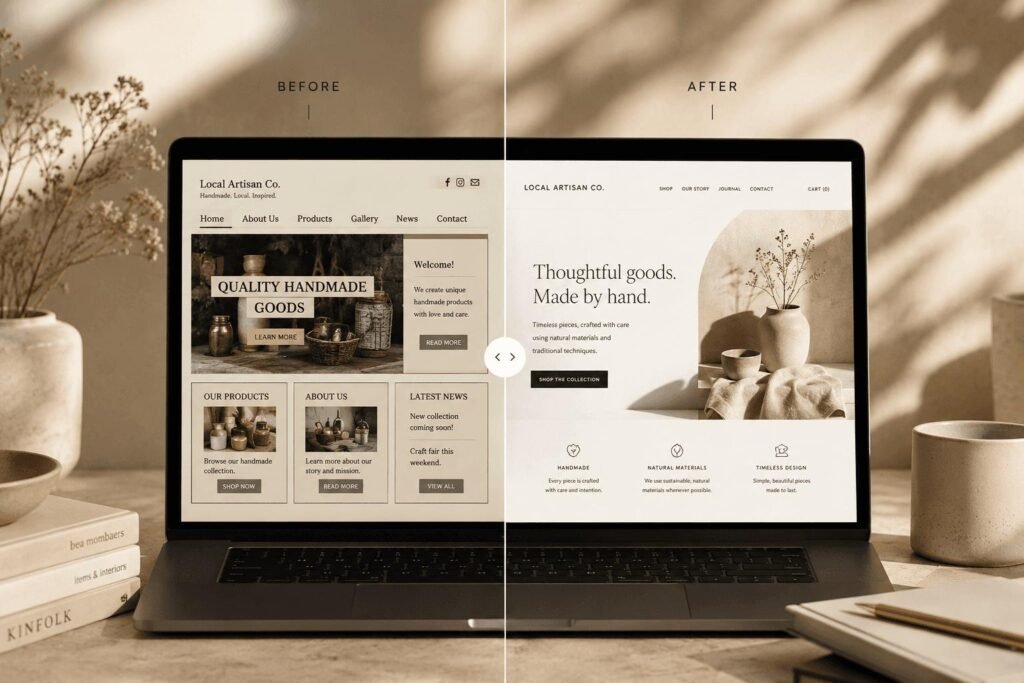
There is no fixed timeline for a website redesign, but certain signs suggest it may be time to consider one.
If the website looks noticeably outdated compared to competitors, or was built more than a few years ago using older design trends, it may no longer reflect the business well. If it does not display properly on mobile devices, or if visitors regularly mention difficulty finding information, these are practical signs worth acting on.
A drop in enquiries or website traffic, without another clear explanation, can also point to design or usability issues. Similarly, if the business itself has changed, such as new services, a different target audience, or a rebrand, the website should be updated to reflect that.
Slow loading times, broken links, or an inability to update content easily are also common reasons small businesses choose a website redesign services provider rather than continuing to patch an old site.
Frequently Asked Questions
1. Why do small businesses need a website?
A website gives a business a professional, always-available space to share information, build trust with potential customers, and receive enquiries. It also helps the business be found by people searching online.
2. What should a small business website include?
At a minimum, it should include clear business information, service or product pages, a contact form, mobile-friendly design, and fast loading speed. Additional features like social media integration and analytics are also useful.
3. Why is responsive web design important?
Since most visitors browse on mobile devices, a responsive design ensures the website displays and functions correctly across different screen sizes, improving user experience and reducing the chance of visitors leaving early.
4. How can professional web design help a business?
Professional design improves first impressions, builds credibility, makes navigation easier, and encourages visitors to take action, such as filling out a contact form or making an enquiry.
5. How often should a business redesign its website?
There is no set rule, but many businesses review their website every few years, or sooner if it no longer reflects the business, performs poorly on mobile, or shows signs of outdated design.
6. How do I choose a web design agency?
Look at their portfolio, relevant experience, communication style, SEO knowledge, and approach to mobile-first design. Confirm website ownership and ongoing support, and check reviews from past clients.
Conclusion
A professional website plays a central role in how small businesses are found, understood, and trusted online. From mobile-friendly design and clear navigation to strong calls to action and fast loading speed, the details of website design directly affect how customers experience a business and whether they choose to get in touch.
Avoiding common design mistakes and knowing when a redesign is needed can help a business stay competitive as customer expectations change. KPTL Web Solution works with small businesses on website design for small business projects, alongside related services such as graphic design and digital marketing, to support businesses building a stronger online presence.