Quick Answer
If you need customers this month, start with Google Ads. If you want steady, lower-cost leads for the next few years, start with SEO. If you can only fund one, choose by your cash flow, not by trend.
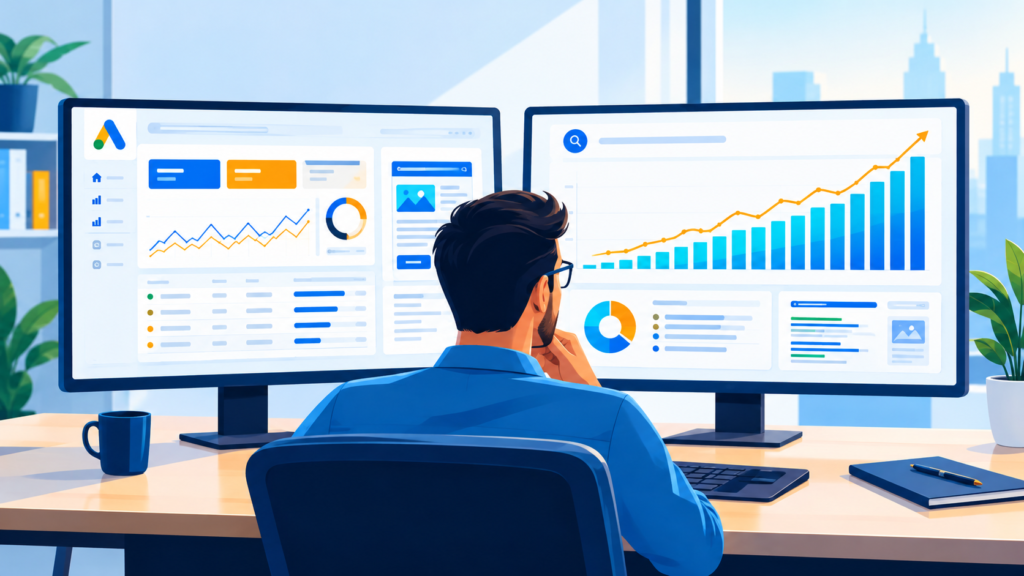
A business with a tight runway, a seasonal offer, or a new product launch usually gets faster returns from paid ads. A business with a longer horizon, a service people search for all year, and some patience usually gets more value from SEO. Most small businesses end up using both, but the order matters. The rest of this article shows you how to decide, so your first rupee, dollar, or pound goes where it works hardest.
Understanding the Two Channels Before You Spend
What Google Ads Really Gives You
Google Ads is a paid platform. You bid on search terms, write a short ad, and Google shows it to people searching for those terms. You pay when someone clicks. Because you control the budget, the message, and the location, you can be in front of buyers within a day or two of launching.
That speed is the main appeal. If you run a plumbing service, a dental clinic, or a local bakery, you can appear at the top of the results the same week you set up your account. The catch is simple: the moment you stop paying, the traffic stops too. Think of it like renting a shop on a busy street. You get the footfall, but you pay rent every month.
If you want help setting up campaigns that don’t waste budget, a professional Google Ads management service can shorten the learning curve considerably.
What SEO Really Gives You
Search engine optimization is the work of making your website easier to find and more useful to read, so it earns a place in the unpaid results. It includes technical fixes, helpful content, page speed, local listings, and trust signals such as reviews and quality links.
SEO is more like buying your own shop than renting one. It takes longer to set up, and you can’t buy your way to the top. But once your pages rank, they keep bringing visitors without a charge per click. Many owners are surprised by how much a single well-written page can bring in over a year. If you’re new to the idea, this overview of search engine optimization services explains what a professional program usually covers.
Google Ads vs SEO: A Fair Side-by-Side Comparison

Speed, Cost, and Control
Speed is where the two channels differ most. Google Ads can produce leads in days. SEO usually needs a few months before the results are visible, and competitive topics can take longer. Anyone who promises first-page rankings in two weeks is overselling.
Cost behaves differently too. With paid ads, every click has a price, and prices rise in crowded markets such as law, insurance, and home services. With SEO, you pay mostly for time and expertise up front, and the cost per visitor tends to fall as your pages mature. That’s why many experienced marketers say SEO is cheaper in the long run but paid search is cheaper in the short run.
On control, ads win. You decide who sees your message, at what time of day, in which city, and at what price. SEO gives you influence rather than control, because rankings depend on how Google judges your pages against everyone else’s.
Trust, Clicks, and Long-Term Value
Searchers are not all alike. Some skip the ads out of habit and prefer organic results, which they often see as more neutral. Others click ads happily when the offer matches what they typed. Neither group is wrong. It means appearing in both places can lift your overall visibility.
There’s also the question of what you own at the end. After a year of paid ads, you own your customer data and some learning about what converts. After a year of SEO, you also own a library of pages, rankings, and authority that keep working. For a business owner thinking about asset value, that difference matters.
Which Channel Fits Your Business Situation?
When Google Ads Should Come First
Paid search is usually the smarter first step in a few clear situations. Consider it first if you launched recently and have no traffic at all, since a brand new site can take months to rank. It also fits if you sell something time-sensitive, such as a festival offer, an event, or a seasonal service. And it helps if you need quick proof that a market exists before you invest in a longer plan.
Ads are also useful for testing. Because you get results fast, you can learn which keywords bring buyers and which only bring browsers. That information is valuable later when you build your SEO content. In other words, a small ad budget can act as market research.
However, ads work best when your website is ready to convert. If your pages load slowly, look dated, or confuse visitors, you’ll pay for clicks that go nowhere. That’s why many owners fix their site first, often with help from a team offering web design and development, and then switch the ads on.
When SEO Should Come First
SEO deserves the first slice of your budget when you have time and a service people search for steadily. A local accountant, a physiotherapist, a wedding photographer, or a software consultant all fit this pattern. People type specific questions into Google every day, and a helpful answer on your website can win their trust before they ever call.
SEO also makes sense if your customer value is modest and your margins are thin. When one paid click costs more than you earn from a typical sale, ads can drain cash quickly. Organic traffic spreads that cost over many months.
Finally, choose SEO first if you’re building a brand for the long term. Content that educates readers, such as guides, comparisons, and local pages, becomes a sales team that works around the clock. Moreover, the visitors who arrive this way often arrive better informed and ready to talk.
How to Split a Small Marketing Budget Wisely
A Practical Spending Framework
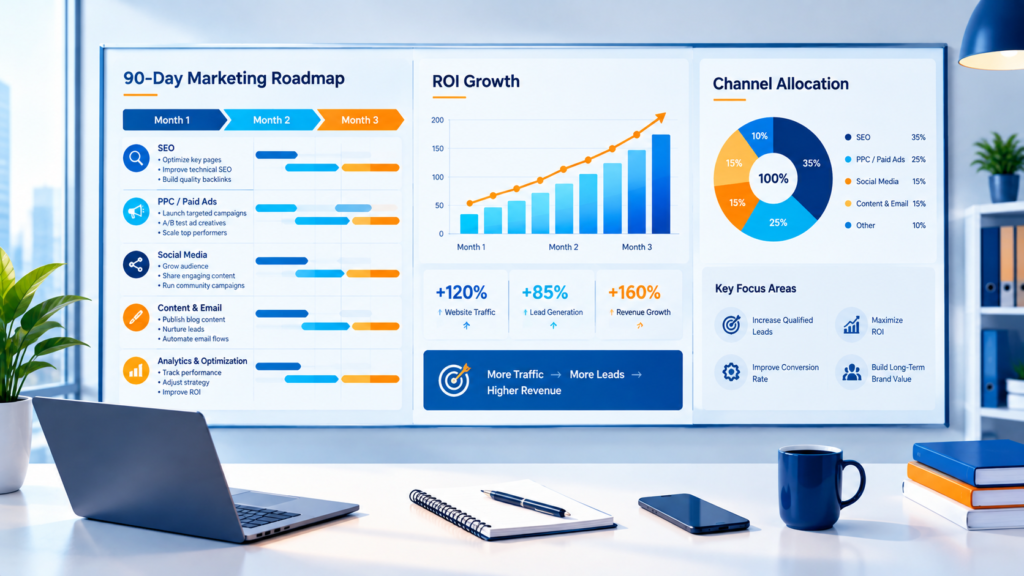
Owners often ask for a fixed percentage, but the honest answer is that it depends on your goals. Still, a simple framework helps. If you need leads right now, consider putting roughly two thirds of your digital budget into ads and one third into SEO foundations. If your priority is long-term growth and you have savings to cover a slower start, flip that ratio.
Whatever split you choose, protect the basics first. You need a fast, mobile-friendly website, a clear offer, a working contact form or phone number, and a Google Business Profile if you serve a local area. These cost little compared with the damage of skipping them. After all, neither channel can rescue a website that doesn’t turn visitors into enquiries.
Also set a spending limit you can live with. A small business should treat the first three months as a learning period, not a gamble. Decide in advance how much you’ll spend, what result you expect, and when you’ll review it.
A Simple 90-Day Plan
In the first month, fix your website’s basics, set up tracking, and research the words your customers actually use. If you’re running ads, launch a small, focused campaign around your most profitable service.
In the second month, publish your first helpful pages and improve your local listing. Review your ad data to see which searches bring calls and which waste money. Cut the weak ones without hesitation.
In the third month, double down on what works. Move budget toward the keywords that convert, write content around the questions you keep hearing from customers, and ask happy clients for reviews. By day ninety you should have data, not guesses, which makes every later decision easier.
Google’s Latest Updates and What They Mean for You
Helpful Content and AI-Driven Search
Google has spent the last few years making one point clear: it wants to reward pages written for people, not for search engines. Its own guidance on creating helpful, reliable, people-first content stresses real experience, clear expertise, and honest usefulness. Thin, copied, or mass-produced pages are increasingly likely to be ignored or demoted.
For small businesses, that’s good news. You know your customers’ problems better than any large publisher does. A page that answers a real question in plain language, with examples from your own work, is exactly what Google says it wants. Meanwhile, AI-generated summaries on results pages mean that clear, well-structured answers have a better chance of being picked up and cited.
This shift also affects the Google Ads vs SEO decision. As search results get more crowded with summaries and ads, strong organic content builds the credibility that makes people choose you when they do click.
What Changes for Paid Search
Google’s ad platform has also moved toward automation. Smart bidding, broad match, and AI-assisted campaigns now handle much of the setup that used to be manual. You can explore the current options on the official Google Ads platform.
Automation helps, but only when you feed it good information. That means accurate conversion tracking, a clear goal, and a landing page that matches the ad. Without those, the system optimizes for the wrong thing and spends your money doing it. Therefore, a small business should check its campaigns weekly, review the search terms report, and add negative keywords to block irrelevant clicks.
Mistakes That Waste a Small Budget
Common Errors With Ads
The most frequent paid search mistake is sending every click to the homepage. A visitor who searched for “emergency boiler repair” wants a page about exactly that, not a general company introduction. Dedicated landing pages almost always convert better.
Another error is ignoring location and timing settings. If you serve one city, paying for clicks from three states is pure waste. Likewise, running ads at midnight when nobody answers the phone rarely pays off. Finally, many owners set a campaign live and forget it for months. Ad accounts need regular care, much like a garden.
Common Errors With SEO
On the organic side, the biggest mistake is chasing keywords instead of answering questions. Stuffing a page with repeated phrases reads badly and no longer helps rankings. Write naturally, and let the topic guide your wording.
Another mistake is expecting overnight results and quitting after six weeks. SEO compounds slowly, so consistency beats intensity. Also, many owners neglect technical health. Slow pages, broken links, and poor mobile layouts quietly hold back even excellent content. Finally, don’t ignore your Google Business Profile if customers find you locally. It’s free, and it often brings quick wins.
Measuring Results and Making the Final Call
Numbers Worth Tracking
You don’t need a dozen dashboards. For ads, watch cost per lead, conversion rate, and the share of spend going to profitable keywords. For SEO, track organic visitors, rankings for your main services, and the number of enquiries that start from organic search. Across both, the number that matters most is how much revenue each channel brings compared with its cost.
Be wary of vanity metrics. A thousand extra visitors mean little if none of them call. A smaller group of well-matched visitors who book appointments is far more valuable. Moreover, tracking phone calls and form submissions properly will tell you more than any traffic chart.
Making the Decision With Confidence
Ask yourself three honest questions. How soon do I need customers? How much can I spend each month without stress? And how long am I willing to wait for results? If speed matters most, lead with ads. If patience is available, lead with SEO. If both matter, run a modest ad campaign alongside a steady content plan, and move money toward whichever channel proves itself.
A broader view can help here too. A well-planned digital marketing strategy connects ads, search, content, and your website so each part supports the others instead of competing for budget.
Frequently Asked Questions
Is Google Ads or SEO better for a small business?
Neither is better in every case. Google Ads suits businesses that need leads quickly, while SEO suits businesses that want lower-cost traffic over the long term. Most small businesses benefit from starting with one and adding the other as results come in.
How long does SEO take to show results?
Most small businesses see early movement within three to six months, though competitive topics can take longer. Results depend on your website’s health, your content quality, and how crowded your market is.
How much should a small business spend on Google Ads?
Start with an amount you can afford to lose while you learn, and set a clear review date after about 90 days. Focus the budget on your most profitable service and a precise local area rather than spreading it thinly.
Can I use Google Ads and SEO together?
Yes. Ads bring quick traffic and show you which keywords convert, and that data helps you plan SEO content. Over time, organic rankings can reduce your reliance on paid clicks.
Final Thoughts: Google Ads vs SEO Isn’t a Fight
The real answer to Google Ads vs SEO is that they solve different problems. Ads rent you attention quickly. SEO builds attention you keep. A small business with limited funds should start where its most urgent problem lies: no customers today points to ads, while rising acquisition costs point to SEO.
Whichever you pick first, prepare the ground. Make your website fast and clear, track your results, and treat the first ninety days as a learning stage. Over time, let the data tell you where each extra pound, dollar, or rupee should go.
Smart owners don’t choose a side. They choose a sequence, and then they adjust it as the numbers come in.