
Quick Answer
It is time to hire a professional designer when your business struggles with inconsistent branding, an outdated website, ineffective marketing visuals, or a growing workload that you cannot manage efficiently. A professional designer can help improve your brand identity, website usability, marketing materials, and overall customer experience. The right time to hire depends on your business goals, budget, project complexity, and the design skills available within your team.
Introduction
Every business needs to make a positive first impression. Whether customers discover your company through a website, social media post, advertisement, or brochure, your visual presentation can influence how they perceive your brand. However, many business owners initially handle design themselves to save money and maintain control over their marketing activities.
This approach can work during the early stages of a business. Free design tools, ready-made templates, and online editing platforms make it easier to create basic graphics without professional assistance. As your business grows, however, its design requirements often become more complex. You may need a professional website, a consistent brand identity, engaging marketing campaigns, or product visuals that stand out in a competitive market.
Recognizing when to hire a professional designer is therefore an important business decision. Hiring without a clear purpose can increase expenses, while waiting too long may result in inconsistent branding, wasted time, and missed business opportunities.
The key is to identify the signs that your current design approach is limiting your progress. Once you understand these warning signs, you can decide whether your business needs a freelance designer, an in-house specialist, or a professional design agency.
1. Your Brand No Longer Reflects Your Business Quality
Your brand identity is often one of the first things potential customers notice. It includes your logo, colors, typography, imagery, website appearance, and the overall visual style of your business. When these elements look inconsistent or outdated, customers may struggle to understand what your company represents.
For example, imagine a business that offers premium consulting services but uses an outdated logo, mismatched colors, and low-quality promotional graphics. Even if the company provides excellent services, its visual presentation may fail to communicate that quality.
A professional designer can help align your brand’s appearance with its values, target audience, and market position. They can establish a consistent visual identity that works across your website, social media profiles, presentations, business cards, and advertising campaigns.
When should you act? Consider professional design support if your business has changed its services, entered a new market, increased its prices, or developed a more specialized audience. These changes may require a brand identity that better represents your current position.
A complete rebrand is not always necessary. Sometimes, updating your typography, refining your logo, improving your color palette, or establishing clear design guidelines can make a meaningful difference.
2. Your Website Looks Outdated or Is Difficult to Use
Your website is more than a digital brochure. It helps potential customers understand your services, evaluate your credibility, and decide whether to contact your business. Therefore, an outdated or confusing website can create unnecessary obstacles during the customer journey.
Common warning signs include cluttered layouts, difficult navigation, inconsistent spacing, poor mobile presentation, unreadable text, and unclear calls to action. Visitors may leave without understanding what you offer or how to take the next step.
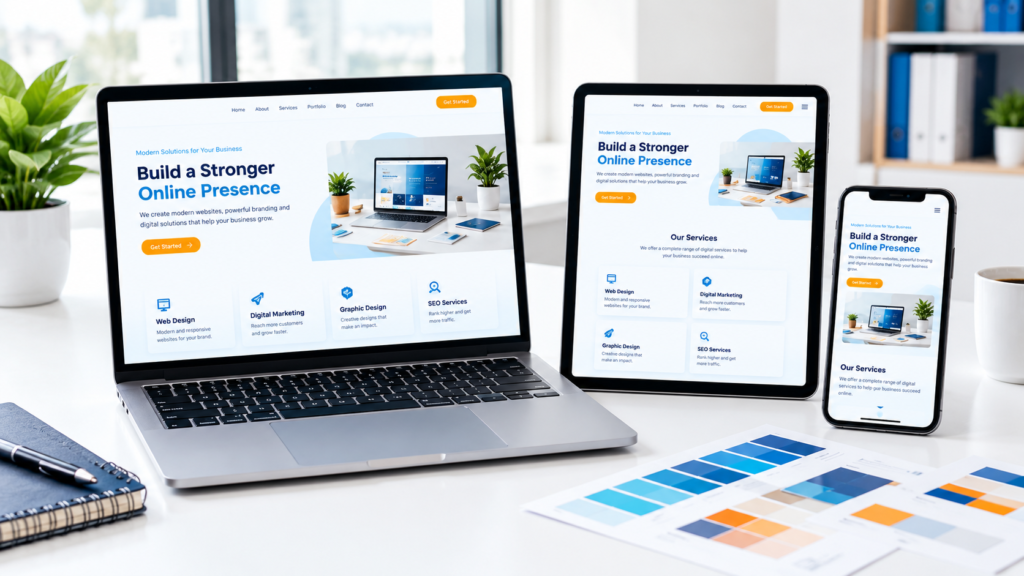
A professional web designer considers both appearance and usability. They organize information logically, create clear visual hierarchies, improve navigation, and ensure that important elements remain accessible across different screen sizes.
For businesses that depend on online enquiries or sales, these improvements can be particularly valuable. A well-planned contact page, clearly presented services, and an easy-to-follow purchasing process can help visitors complete their intended actions.
Before investing in a redesign, review your website analytics, customer feedback, mobile experience, and conversion data. This information helps identify whether the main problem involves design, content, technical performance, or a combination of factors.
If your website needs a more structured and user-friendly appearance, explore professional web design services to understand the elements involved in creating an effective business website.
3. DIY Design Is Consuming Too Much of Your Time
Managing a business already involves several responsibilities, including customer communication, sales, operations, budgeting, and marketing. Creating every graphic, editing website layouts, adjusting images, and preparing presentations can take time away from these priorities.
DIY design may seem inexpensive because you are not paying a designer directly. However, the time you spend learning software, correcting mistakes, and repeatedly revising layouts also has a cost.
Suppose you spend five hours preparing promotional graphics each week. That adds up to approximately 20 hours every month. If those hours could be used for sales activities, client relationships, or business planning, delegating design work may offer better overall value.
A professional designer can create reusable templates, establish visual guidelines, and prepare assets that are easier to update. As a result, your team may spend less time making routine design decisions.
However, you do not need to outsource every creative task. You can continue handling simple social media updates and internal documents while assigning high-impact projects to a professional.
The best decision is to identify which activities require specialist skills and which can be completed efficiently using existing tools.
4. Your Marketing Materials Look Inconsistent
Brand consistency becomes increasingly important as a business expands its marketing activities. Your website, social media posts, advertisements, brochures, email graphics, and presentations should feel as though they belong to the same company.
When each asset uses different fonts, colors, image styles, or layouts, customers may find it harder to recognize your brand. In addition, an inconsistent presentation can make your marketing appear less organized than the business itself.
A professional designer can develop a visual system that brings these materials together. This may include approved brand colors, typography, image treatments, logo variations, layout rules, and templates for recurring campaigns.
For instance, a growing service business might need consistent designs for LinkedIn posts, Instagram creatives, lead-generation advertisements, downloadable guides, and sales presentations. Instead of creating each asset independently, the designer can establish a common visual direction.
This approach saves time and makes it easier for multiple team members to produce marketing materials without compromising the brand identity.
If your company regularly publishes promotional graphics or campaign creatives, professional graphic design services can help establish a more consistent visual presentation across marketing channels.
5. Your Business Is Preparing for an Important Launch
Certain business milestones create a clear need for professional design. These include launching a new product, opening a new location, introducing a service, entering a different market, or preparing for a major promotional campaign.
At these moments, your business needs more than attractive visuals. It needs design assets that communicate the offer clearly, answer customer questions, and support the launch objectives.
For example, an ecommerce business launching a new product may require product images, packaging design, landing page graphics, advertising creatives, and promotional banners. A professional service provider may need a new website, presentation deck, case study layout, and branded sales materials.
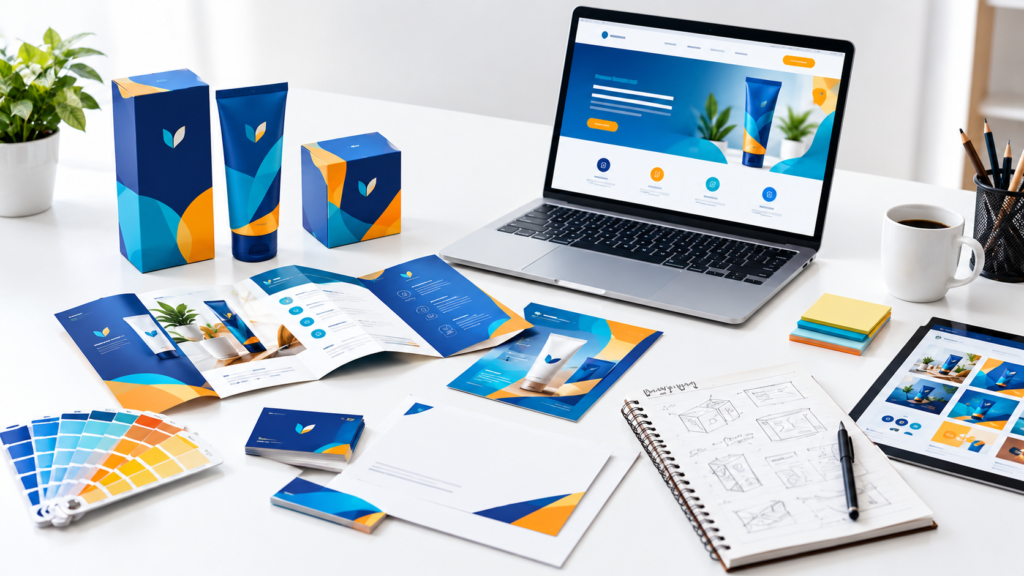
Handling all these tasks independently can create inconsistencies and delay the launch. A designer can coordinate the visual direction and ensure that each asset supports the same message.
Ideally, involve the designer before the launch date becomes urgent. Early collaboration provides time for research, initial concepts, revisions, and testing.
Before hiring, prepare a clear brief that explains your target audience, project goals, required deliverables, preferred style, budget, and deadline. This helps the designer understand what success means for your business.
6. Your Marketing Campaigns Are Not Communicating Clearly
Good design is not simply about making something attractive. It also helps people understand information quickly and recognize the action they should take.
If your advertisements contain too many elements, your landing pages hide important information, or your promotional graphics lack a clear message, the problem may involve visual communication.
For example, an advertisement may contain several competing headlines, decorative graphics, and multiple calls to action. Instead of guiding the audience towards one useful next step, the design creates confusion.
A professional designer can improve information hierarchy by emphasizing the most important message, organizing supporting details, choosing suitable imagery, and making the desired action easier to identify.
Nevertheless, poor campaign performance does not automatically mean you need a designer. Weak targeting, an irrelevant offer, slow website loading, incorrect tracking, or poorly written copy can also reduce results.
Review campaign data before deciding what to change. If visitors are interested in the offer but struggle to navigate the landing page or understand the message, design improvements may be appropriate.
For broader campaign planning, digital marketing services can complement design work by connecting creative assets with audience targeting, content, search visibility, and performance measurement.
7. Your Business Needs More Than Basic Templates
Templates are useful for everyday content. They provide ready-made layouts, reduce production time, and help small businesses maintain a reasonably consistent appearance.
However, templates have limitations. They may not fully represent your brand personality, communicate a complex product, or differentiate your business from competitors using similar layouts.
This becomes particularly important when your company operates in a crowded market or offers specialized services that require detailed explanations.
A professional designer can create custom layouts, illustrations, infographics, product visuals, and branded assets that address your specific communication needs. They can also adapt designs to different formats while maintaining visual consistency.
Consider a software company explaining a complicated product. A generic template may not communicate the workflow effectively, whereas a custom diagram or carefully structured interface graphic can make the information easier to understand.
That does not mean custom design is always better. For routine announcements, simple internal documents, or basic social media updates, templates may remain the most practical option.
Hire a professional when the project requires a distinctive visual identity, specialized design skills, or a level of quality that your existing tools cannot reliably deliver.
8. Your Business Is Growing Faster Than Your Current Design Process
Business growth often increases the number and complexity of design tasks. A company that once needed a few social media graphics each month may eventually require website updates, advertising campaigns, product catalogues, sales presentations, and regular promotional materials.
When design requests become frequent, the existing process may start breaking down. Marketing campaigns get delayed, different employees create conflicting visuals, and important projects compete for limited time.
A professional designer can introduce a more organized workflow. This may include a design calendar, reusable templates, documented brand guidelines, defined approval stages, and a system for managing revisions.
The right hiring model depends on how much work your business generates. A freelancer may be suitable for occasional projects, while an agency can support several connected requirements. An in-house designer may make sense when design work is continuous and close collaboration is essential.
Before making a decision, estimate your monthly workload and identify the skills you need most often. Consider whether your requirements involve branding, website design, social media creatives, packaging, or several specialties.
This assessment helps you select a solution that supports growth without creating unnecessary fixed costs.
9. You Are Entering a Competitive Market
When customers compare similar businesses, they often look for signs of credibility, professionalism, and relevance. Design can help communicate these qualities, particularly when potential customers are unfamiliar with your company.
A clear website, consistent branding, high-quality product images, and well-organized service pages can make it easier for visitors to understand what distinguishes your business from competitors.
However, effective competitive design does not mean copying another company’s website or visual identity. Instead, it involves understanding your audience, reviewing the market, identifying common design patterns, and developing a distinctive presentation that reflects your own value proposition.
A professional designer can help translate that positioning into a recognizable visual identity. They can also ensure that the design reflects your actual customer experience rather than making promises your business cannot deliver.
Before hiring, review competitor websites, customer reviews, common industry expectations, and the questions potential customers ask before purchasing. Use these findings to prepare a clear design brief.
For businesses investing in organic visibility alongside their visual identity, search engine optimization services can support the wider goal of helping relevant customers discover the website. Design and SEO serve different purposes, but they can work together to create a more useful online experience.
10. Your Current Design Is Not Delivering the Required Business Results
One of the strongest reasons to hire a professional designer is that your current visual assets are not supporting your business objectives effectively.
You may receive website visits without enquiries, attract social media attention without meaningful engagement, or struggle to explain your services through existing promotional materials. These situations deserve investigation rather than an automatic redesign.
Start by defining the problem. Are visitors leaving because the website is difficult to navigate? Are product images failing to show important details? Do customers misunderstand the offer? Are your calls to action difficult to notice?
Use available evidence to identify where people encounter difficulties. Website analytics, user feedback, customer support questions, usability testing, and campaign performance reports can help reveal potential problems.
Next, agree on measurable objectives with the designer. Depending on the project, these might include improving task completion, reducing navigation errors, increasing engagement with important content, or making the brand more consistent across channels.
Remember that design is only one part of business performance. Pricing, product quality, customer service, website speed, market demand, and marketing strategy also influence results.
A professional designer should understand the business problem before proposing a visual solution. This makes the project more purposeful and provides a clearer basis for evaluating its value.
How to Decide Whether Your Business Is Ready to Hire a Designer
Recognizing the warning signs is the first step. The next is determining whether your business has a clear reason, suitable budget, and practical plan for hiring.
Start by identifying the project that needs attention most urgently. A website redesign, brand identity update, product launch, or advertising campaign may have different requirements, timelines, and costs.
Next, establish a realistic budget. Ask potential designers to explain what is included in their fees, such as research, initial concepts, revisions, final files, responsive layouts, and post-launch support. Compare proposals based on the scope and expected deliverables rather than choosing solely by price.
Then, review the designer’s portfolio. Look for relevant projects, attention to detail, consistency, usability, and evidence that the work suits your intended audience. Ask about their process, communication methods, timelines, and how they handle feedback.
It is also important to understand the role of user experience in website design. According to the Nielsen Norman Group’s research on first impressions, people form quick impressions of websites based on their visual design. Therefore, investing in thoughtful design can help your business create a more credible and consistent online presence.
Finally, define how you will evaluate the outcome. A successful project should address the original problem and provide deliverables that your team can use effectively.
If your requirements are occasional and well-defined, a freelancer may be sufficient. If you need several related services, an agency may provide a more coordinated solution. If your workload is constant, an in-house designer could be worth considering.
Common Mistakes to Avoid When Hiring a Professional Designer
Hiring a designer can be a valuable investment, but unclear expectations may lead to delays, additional costs, or disappointing results.
One common mistake is choosing a designer based only on the lowest quote. Price matters, but so do experience, communication, technical skills, project scope, and the quality of the final deliverables.
Another mistake is starting without a clear brief. If you cannot explain your target audience, business objectives, preferred direction, and required assets, the designer may struggle to develop a suitable solution. You do not need to know every technical detail, but you should be able to explain what the project needs to accomplish.
It is also important to avoid excessive revisions caused by changing requirements. Gather feedback from the relevant decision-makers before sharing it with the designer. This reduces conflicting instructions and helps keep the project focused.
Finally, do not assume that attractive design alone guarantees more sales or better search rankings. Design should work alongside strong messaging, useful content, reliable website performance, and a relevant marketing strategy.
Conclusion
Knowing when to hire a professional designer comes down to recognizing the point at which your current approach no longer supports your business goals. An inconsistent brand, outdated website, growing workload, unclear marketing materials, or an important upcoming launch can all indicate that professional expertise would be valuable.
However, hiring should be based on a specific business need rather than the assumption that every company requires expensive custom design. Start with your most important problem, define the expected outcome, and choose a designer whose skills match the project.
For growing businesses, the right design investment can improve brand consistency, make information easier to understand, support better customer experiences, and provide a stronger foundation for future marketing.
The goal is not simply to make your business look better. It is to communicate your value clearly, help customers make informed decisions, and ensure that your visual presentation keeps pace with your business ambitions.
Frequently Asked Questions
1. When should a small business hire a professional designer?
A small business should consider hiring a professional designer when its branding looks inconsistent, its website needs significant improvement, or its marketing materials no longer meet customer expectations. A professional can also be valuable before a product launch, rebrand, or major marketing campaign.
2. Is hiring a professional designer worth the investment?
It can be worthwhile when the designer solves a clear business problem. Better usability, consistent branding, clearer communication, and more efficient production workflows can provide value. However, results depend on the project’s quality, implementation, audience, and business circumstances.
3. Should I hire a freelance designer or a design agency?
A freelance designer is often suitable for a specific project or occasional design tasks. An agency may be more appropriate when you need multiple complementary services, such as branding, web design, and marketing support. Compare your workload, budget, deadlines, and required expertise before deciding.
4. What should I prepare before hiring a designer?
Prepare a project brief that includes your business goals, target audience, required deliverables, preferred visual direction, budget, and deadline. You can also share examples you like, existing brand assets, competitor references, and relevant customer feedback.
5. Can a professional designer help improve website conversions?
Yes, design improvements can make a website easier to navigate, clarify important information, and make calls to action more noticeable. However, conversions also depend on factors such as the offer, pricing, traffic quality, page speed, and customer trust. Results should be measured rather than assumed.
6. Does every business need a custom design?
No. Templates and standard design tools can be effective for basic, low-risk tasks. Custom design becomes more useful when a business needs a distinctive identity, complex visual communication, specialized functionality, or a consistent system for multiple marketing channels.
7. How can I evaluate whether a designer is right for my business?
Review their portfolio, relevant experience, communication style, project process, revision policy, pricing, and delivery terms. Ask how they approach business objectives and user needs, not just visual appearance. A suitable designer should be able to explain how their proposed work addresses your requirements.