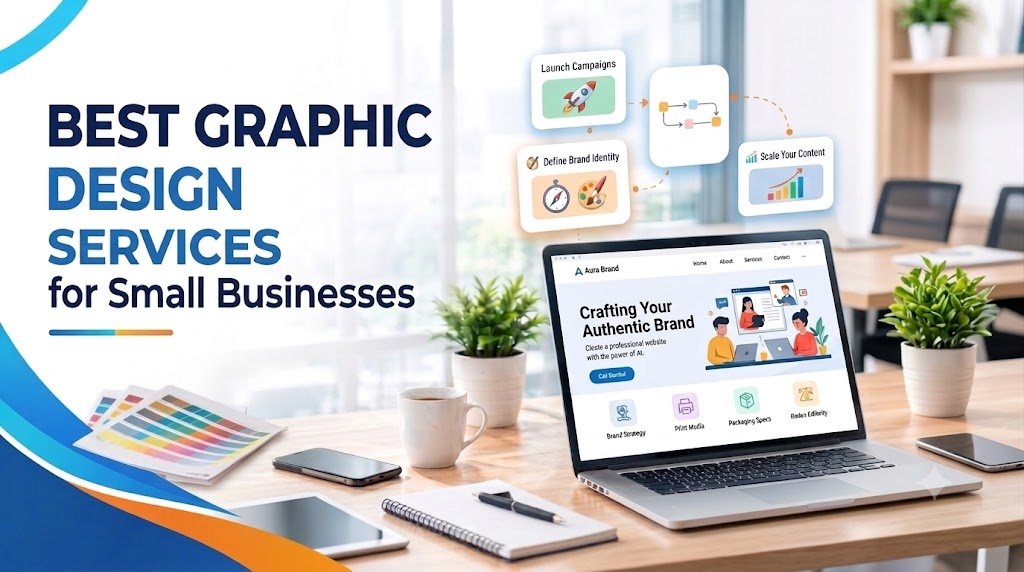
A designer who only pushes shapes around in an app will quickly cost you money without bringing in leads. You really need someone who grasps why everyday people decide to buy things. For early-stage companies and startups, partnering with an agency like KPTL Services takes away the headache of managing half a dozen independent contractors. When your primary logo, printed handouts, interface wireframes, and live website come from a single team, your brand shows the same professional face on every channel.
Consider what happens when you land on an unfamiliar website. Within two or three seconds, you take in the top banner, glance at the logo, and your intuition decides whether you are dealing with an established firm or a risky side hustle. Most people make that call before reading the actual headline. Grounded in the principles of modern design, polished creative work is not a luxury upgrade you save for later years. It represents the baseline standard required for customers to trust you with their payment details.
Finding dependable creative partners is rarely straightforward. Founders often find themselves trapped between generic online templates that hundreds of competitors share, crowded bidding portals full of cut-and-paste ideas, and traditional design agencies asking for massive retainers just to start a project. You spend weeks debating minor tweaks, burn through your marketing funds, and end up with files you cannot even send to a local print shop six months down the road. Let us look at how to get this right from day one.
Why Thoughtful Design Pulls In Real Revenue
Many business owners treat visual styling like frosting on a cake that is already fully baked. They plan out their whole service model, finalize their products, and leave visual branding as a rushed chore at the very end. That habit costs real money.
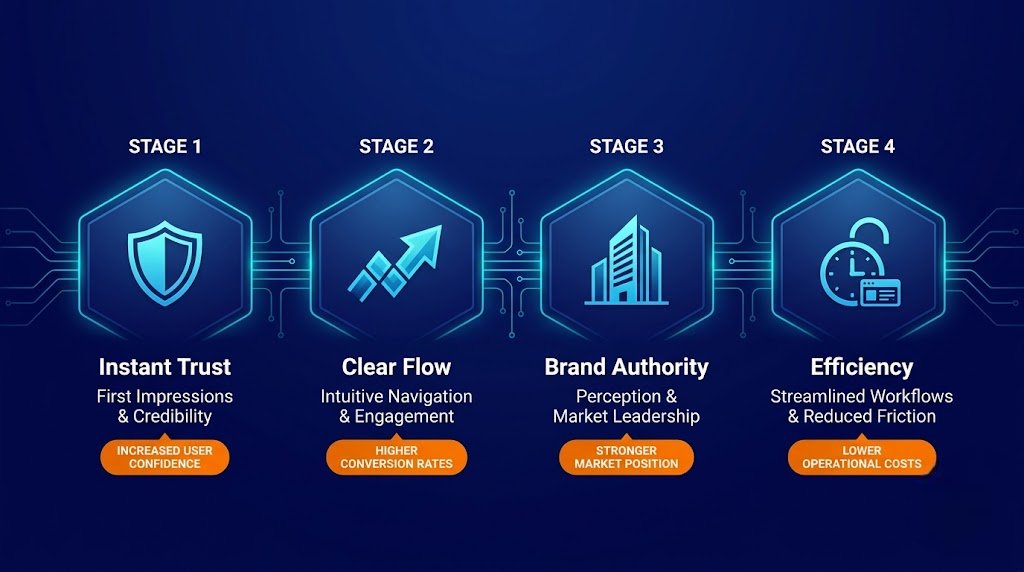
Establishing Instant Commercial Trust
Clean visuals establish direct trust right out of the gate. When a prospect reviews three different local bids for the same job, visual quality often tips the scale. If your font choices look sharp and page spacing feels deliberate, visitors figure you run a reliable operation. But if your graphic assets look blurry and your text formatting looks messy, clients hesitate before reaching out.
Clearing the Path to Inquiries
Organized pages lead directly to more customer inquiries. High-performing design functions like clear signage on a road. When you give content room to breathe and drop inquiry buttons where eyes naturally travel, more people actually submit your forms. We regularly watch service businesses double their inquiries simply by organizing their pages better, without buying extra search traffic.
Competing with Industry Giants
It allows an independent team to stand right next to national operators. You might not possess the marketing reserves of an enterprise rival, but clean, focused brand assets make you look just as capable. It keeps your name fresh in a buyer’s memory so they mention your business when colleagues ask for recommendations.
Saving Precious Internal Hours
Settling your visual identity frees your staff from wasting working hours on repetitive tasks. Without locked guidelines, team members spend valuable time debating background colors, dropping tiny raster graphics onto sales materials, and building disjointed pitch decks. Resolving your core assets once puts an end to that wasted energy.
What You Should Actually Find in Your Final Delivery Folder
Founders often wonder what they are paying for besides a folder of basic image exports. A complete, production-ready creative system contains several specific components.
Vector Master Files and Guidelines
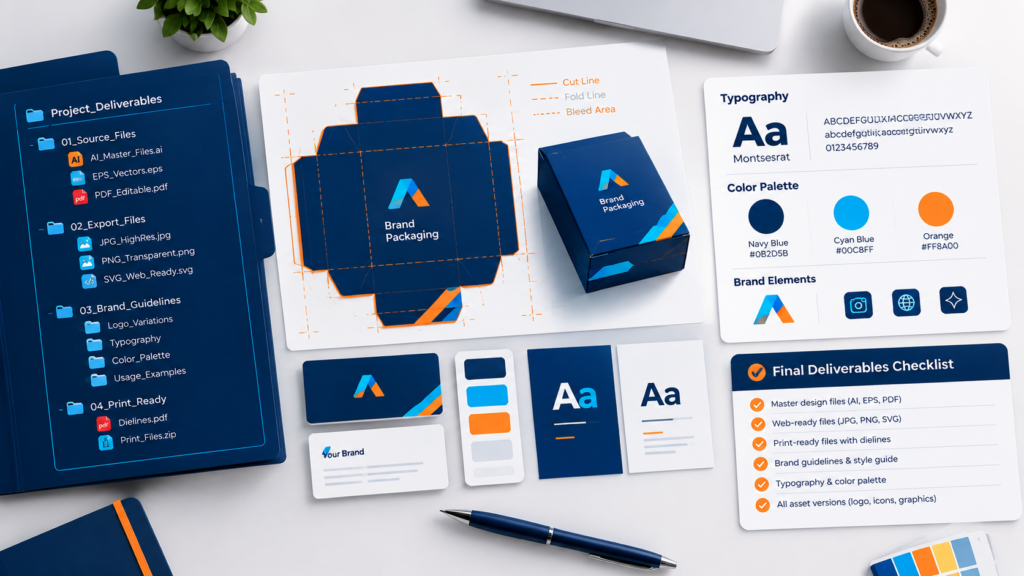
Vector master files serve as the foundation for everything else. You need raw files in formats like SVG, AI, and EPS so graphics stay sharp whether they sit on a mobile browser tab or stretch across a work van. Alongside those, concise brand rulebooks outline your color formulas, giving you RGB values for digital monitors and CMYK percentages for commercial print shops, plus approved typography rules.
Physical Collateral and Digital Assets
Print materials include press-ready assets prepared with proper cutlines and bleed spacing for business cards, product boxes, takeaway brochures, and trade show banners. Digital kits provide clean, editable templates for social carousels, display advertising, email newsletters, and slide presentations.
Packaging Specs and UI Mockups
Packaging layouts feature accurate dielines, barcode margins, and specific instructions for printers regarding special finishes such as spot UV or matte coatings. User interface wireframes provide responsive layouts, mobile screen flows, and custom iconography mapped out around how people actually scroll and tap on phones. A reliable team explains the business reasons behind these layouts rather than just dropping a download link and walking away.
The Four Realistic Ways to Source Your Design Work
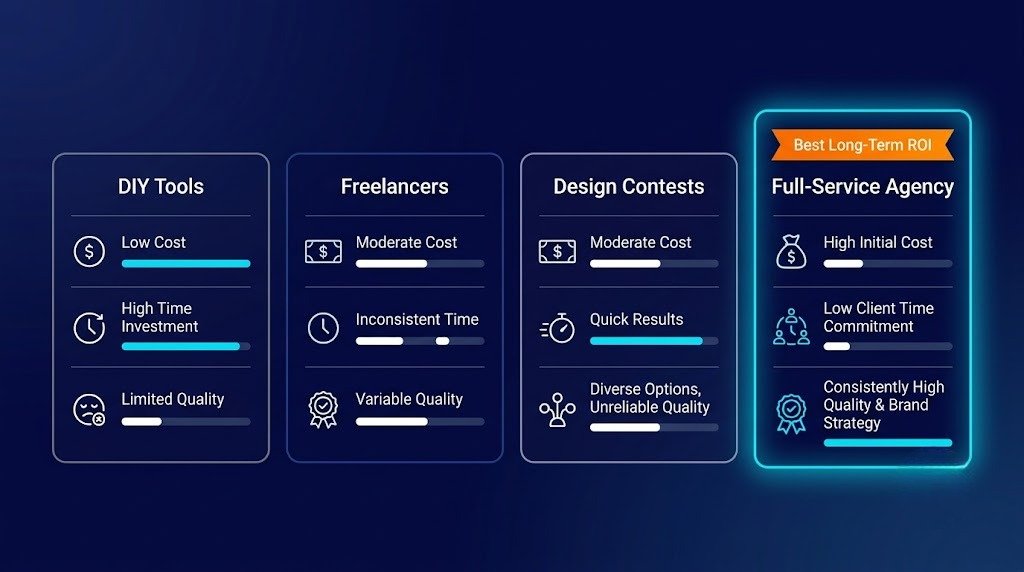
Every business has different constraints, so no single sourcing path works for everyone. The right option depends on your growth pace and how many moving parts you want to handle yourself.
DIY Software and Ready-Made Templates
Template tools work well when you are testing a brand-new concept on a weekend with zero spare capital. You pay a low monthly fee and download visual assets immediately. The obvious drawback is that countless other businesses use those exact same graphics, meaning you cannot claim exclusive ownership or build a unique presence.
Solo Freelancers
Independent freelancers work nicely for small, standalone requests like cleaning up a product photo or laying out a one-page event sheet. You get direct communication and flexible pricing. The main challenge comes from reliability. Contractors get overbooked or change plans unexpectedly, and finding someone who understands commercial print requirements as well as web code is rare.
Design Contest Marketplaces
Crowdsourcing platforms draw people who want to see dozens of loose concepts at once. You get plenty of rough visual ideas, but participants work rapidly across many contests to make the economics work. That setup encourages borrowed stock art, leaves little room for deep strategy, and leaves you without support when a file fails to print properly later on.
Full-Service Creative Agencies
Full-service agencies like KPTL Services suit companies looking to build a lasting identity without juggling independent freelancers. An agency maintains visual consistency across your print assets, digital collateral, and live website, while transferring full ownership of your source files. You can see how our integrated team operates by checking our about us page, which shows why unified production prevents the expensive routine of redesigning your website every twelve months.
Technical Details That Can Make or Break Your Brand
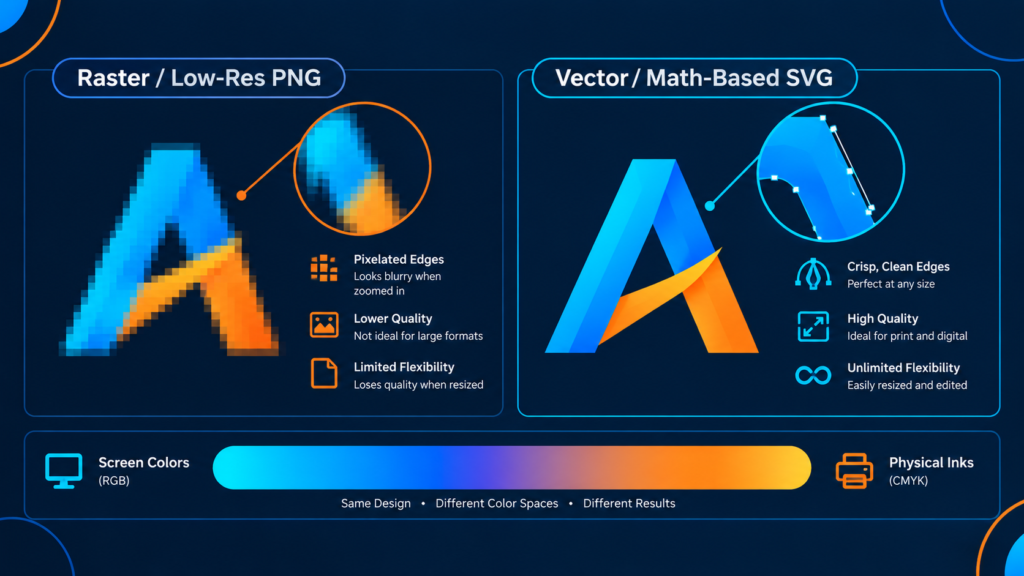
Business owners often tune out technical file standards because they sound tedious, but technical slip-ups are exactly what create surprise expenses later on.
The Vector Versus Raster Trap
The most widespread mistake small business owners encounter is walking away with only raster image files. A budget provider designs a logo mark inside basic photo software and sends over a flat JPG or PNG image. On a desktop or laptop monitor, the graphic seems completely clear.
The issue is that raster graphics depend on a set number of pixels. So long as the graphic stays small, the edges look clean. But when your business expands and you want to display that logo on an office window or a trade show display, the printing software has to stretch those pixels. The entire graphic turns into fuzzy, pixelated blocks.
True vector files created to current vector graphics standards do not use pixels. They rely on mathematical formulas to plot shapes and curves. That means you can scale a vector mark to cover a commercial billboard and the lines remain razor-sharp. A creative team that delivers only flat raster images without master vector artwork is leaving your brand stranded.
Screen Colors Versus Physical Inks
Another frequent technical problem is color drift between electronic screens and printed paper.
Your mobile phone and computer monitors operate in the RGB color space, mixing red, green, and blue light. Since RGB represents light emitted from a display, it can show vivid, glowing tones that look punchy on a screen.
Commercial print shops do not work with light. They apply physical ink to paper using CMYK, which blends cyan, magenta, yellow, and black. The spectrum of colors ink can physically reproduce on paper is noticeably narrower than what an illuminated glass screen displays.
If a designer builds your brand colors purely on a monitor without testing how those shades render in CMYK, an electric blue or bright orange on your screen will print as a muddy, washed-out tone on your customer brochures. A professional partner checks every shade across both formats early on, delivering exact color codes for screens and physical paper so your brand looks consistent everywhere.
What to Expect in a Professional Scope of Work
Design estimates fluctuate wildly across the industry, which creates plenty of confusion for founders. That cost gap typically comes down to whether someone is just drawing a pretty picture or building an actual system for your business.
A cheap mark from a bidding board is nearly always a stock graphic pulled from an open library with your company name placed next to it. You cannot register that mark as an official trademark because someone else owns the original asset, and your trademark application will get turned down.
When hiring a team to build your visual assets, check that your project scope includes these core elements:
- A basic identity package needs original vector marks, dark and light variations, web-safe font pairings, and standard web image exports.
- A broader brand identity setup needs brand manuals, print stationery, social media templates, and custom icon sets.
- A digital interface scope needs responsive wireframes for phones and computers, customer journey flowcharts, and structured design files ready for web developers.
Check your paperwork to verify that your business retains complete copyright over the final designs, and that all master files are handed over once invoices are cleared.
How to Tell If a Creative Partner Understands Real Production
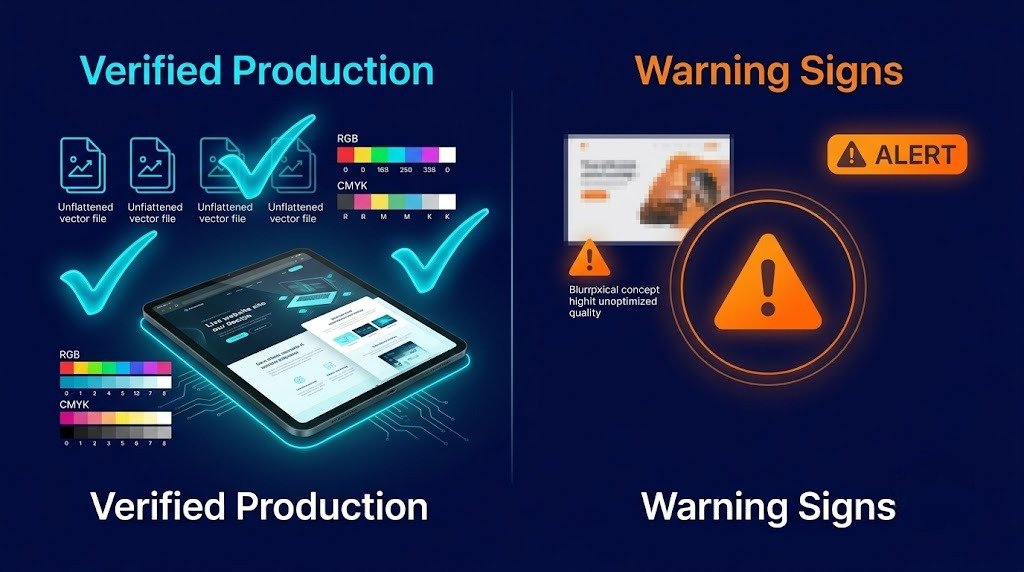
Before paying an initial project deposit, run through these straightforward evaluation steps.
Ask to See Real Client Case Studies
Anyone can mock up an attractive concept for a fictional company on an online portfolio. Practical design has to survive tight deadlines, client revisions, and real sales targets. Ask to see live work currently serving real businesses across various industries.
Get Delivery Terms in Writing Before Kickoff
Verify that unflattened design files come standard with your package. If an agency tries to charge extra release fees later just to send over your master vector files, look for another partner.
Ask a Few Technical Production Questions
Ask how they set up bleed margins for offset print runs, or how their web graphics are compressed to protect site loading times. If they hesitate or dodge the topic, they only know how to create artwork, not prepare files for live deployment.
Notice What They Ask You During Discovery
If a creative shop issues a quote without asking about your target buyers, your main competitors, or your sales model, they are treating your brand like an assembly-line order rather than working as a commercial partner.
Warning Signs to Watch Out For
Protect your capital and project schedules by watching for these clear warning signs:
- Avoid providers promising complete brand identity packages within twenty-four hours. Developing an original visual identity demands competitive research, sketching, and testing. A same-day turnaround usually means someone pasted your business name into an existing template.
- Watch out for restrictive licensing clauses. Some vendors insert terms reserving ownership of the source files, then request recurring licensing payments whenever you print branded merchandise down the line.
- Never accept only flat JPEG files. Walking away with only flat files leaves you stuck the moment you need commercial signage, vehicle graphics, or embroidered staff uniforms.
- Check for proper font licensing. If a designer builds your brand using unlicensed desktop fonts on public web pages, your company could receive costly copyright notices from type foundries.
Why Businesses Rely on KPTL Services
KPTL Services eliminates the friction of managing several independent design contractors. Instead of handling a freelance illustrator for print items, an interface contractor for app wireframes, and an independent developer for code, you work with a unified team.
Your visual standards remain uniform. The typography and color schemes created for your business cards and sales flyers carry directly into your custom responsive website.
We design around practical business results. Our team focuses on visual contrast, layout flow, and button placement so your website visitors pick up the phone or submit contact forms.
You retain complete ownership. You receive full intellectual property rights, unflattened master files, and clear deliverables without hidden licensing fees.
Your web graphics are built for speed. Because our developers code websites alongside visual design, every digital image arrives lightweight, quick to load, and easy for search engines to crawl.
Core Creative Services Available
Our full suite of services covers business collateral, physical packaging, event displays, and performance marketing graphics.
Our branding solutions deliver primary logos, secondary marks, typography setups, and practical brand guideline documents.
Our UI and UX design work provides intuitive, mobile-ready interfaces built around how real people browse, keeping drop-offs low.
Our performance digital marketing and web development builds deliver fast, responsive sites made to attract organic search traffic and convert prospects into clients.
Common Questions About Professional Design
When should a business move from a solo freelancer to an agency?
If you only need a single graphic adjusted or a quick social post created, an independent freelancer works well. If you are updating your brand image, building a new website, or spending money on advertising, an agency provides the multidisciplinary team needed to keep every channel consistent.
What specific files should you receive when a project wraps up?
You should receive scalable vector files in SVG, EPS, or AI formats, press-ready print PDFs in CMYK with bleed margins, and lightweight web images in PNG or WEBP formats.
How long does a thorough branding project take?
Most comprehensive identity projects take between two and four weeks. That schedule provides enough room to analyze competitors, review preliminary drafts, process feedback, and prepare final production assets.
Why are vector files non-negotiable for business assets?
Vectors rely on mathematical equations instead of pixel grids. That allows you to scale a company logo from a small pen imprint up to an outdoor billboard without any loss in clarity.
Does KPTL Services build the live website as well as the visual design?
Yes. Handling interface design and front-end coding under one roof ensures the layout, spacing, and mobile behaviors designed on artboards look identical once published live.
Upgrade Your Visual Brand
Visual presentation is often the deciding factor when a prospect chooses between you and an identical competitor. Take an objective look at your existing sales materials, determine if they represent the true quality of your service, and partner with a creative team dedicated to commercial growth.
If you are ready to update your visual assets, refine your digital interfaces, and build a fast site that converts, reach out to our team at KPTL Services today to schedule a consultation.