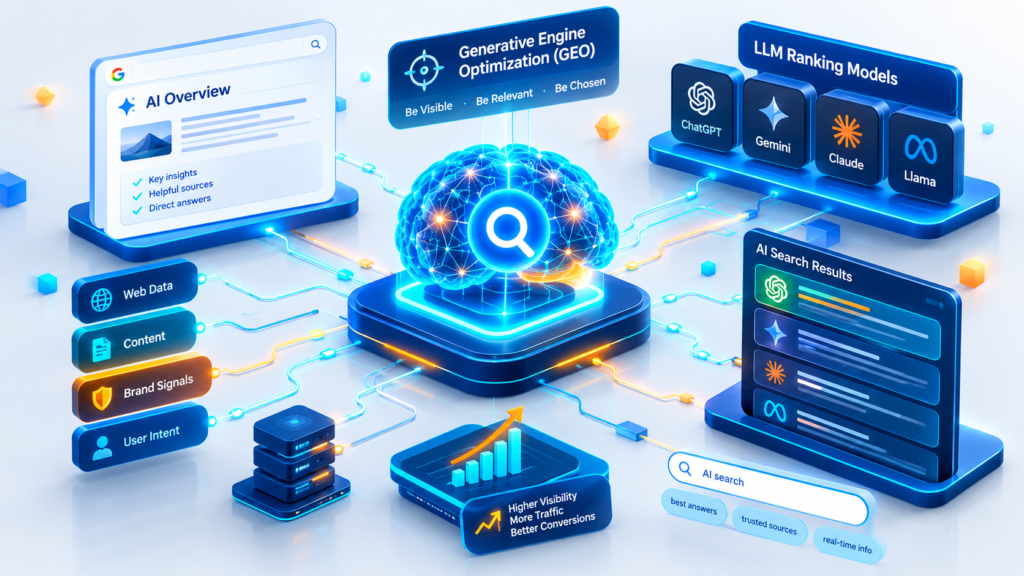
Is SEO Still Effective With AI Search Changing Everything? Quick Answer: Yes, SEO is still effective in 2026, but the way businesses attract organic traffic is changing. AI-powered search experiences, including Google AI Overviews and AI Mode, are changing how people discover information, compare products, and choose service providers. However, SEO remains essential for helping search engines understand your website, discover useful content, and connect your business with potential customers. The key is to move beyond traditional keyword rankings and focus on helpful content, strong website performance, brand credibility, search visibility, and measurable business results. Introduction: How AI Is Changing the SEO Landscape Search engine optimization has helped businesses attract customers online for years. Traditionally, people entered a keyword into Google, reviewed the search results, and clicked on websites that appeared relevant. Today, the process is becoming more conversational. Users can ask detailed questions and receive AI-generated summaries that combine information from multiple sources. As a result, business owners are asking an important question: if AI can answer customers' questions directly, is investing in SEO still worthwhile? The answer is yes, although businesses need to adjust their strategies. Search engines still need relevant, accessible, and trustworthy information to deliver useful results. Meanwhile, customers continue to research companies, compare solutions, check reviews, and visit websites before making important decisions. Therefore, modern SEO is no longer just about reaching the first page of Google. It is about making your business discoverable across traditional search results and AI-assisted search experiences while giving customers a compelling reason to choose you. For companies looking to build a stronger digital presence, investing in professional SEO services can help establish the technical, content, and authority foundations needed for sustainable growth. 1. Why SEO Still Matters in the Age of AI Search AI search has changed how information appears, but it has not removed the need for useful websites. Google explains that its AI search features rely on existing Search systems and that established SEO practices remain relevant to these experiences. This matters because AI-generated answers do not eliminate the need to discover and evaluate reliable information. Websites can still earn visibility through relevant search results, supporting links, and other search features. For businesses, SEO continues to offer three important benefits. First, it helps potential customers discover products and services when they are actively looking for solutions. Second, it builds a long-term online presence that is not entirely dependent on paid advertising. Third, it creates opportunities to demonstrate expertise and build trust before a customer contacts your company. For example, a business providing website development services can publish useful guides about website costs, mobile responsiveness, conversion optimization, and technical maintenance. These resources can attract people researching a project before they are ready to hire an agency. Consequently, SEO remains valuable when it connects relevant searches with genuinely useful business information. The strategy must evolve, but the underlying objective remains the same: help the right people find the right solution. 2. How AI Search Is Changing Organic Traffic One of the biggest changes business owners should understand is the relationship between search visibility and website clicks. AI-generated summaries can answer straightforward questions directly on the search results page. When users find everything they need in that summary, they may not visit the websites that helped inform it. This behavior is often described as a zero-click search. For instance, someone searching for a basic definition of SEO might be satisfied with an AI-generated explanation. However, a business owner comparing SEO agencies may still need service details, pricing information, case studies, consultation options, and evidence of expertise. This difference is important. Some informational keywords may generate fewer website visits, while searches involving complex decisions or specific business needs can still create opportunities for qualified traffic. Research published by Ahrefs in January 2026 reported declining click-through rates associated with Google AI Overviews in its analysis. However, the effect varies by query, industry, search layout, and audience. Businesses should not assume that every keyword or website will experience the same decline. The practical response is to evaluate SEO performance beyond rankings alone. Monitor organic clicks, qualified enquiries, conversion rates, branded searches, and revenue where attribution is available. In other words, fewer visits do not automatically mean SEO has failed. If your website attracts fewer but more relevant visitors who are more likely to become customers, the business impact may still be positive. 3. Traditional SEO vs. AI Search Optimization Traditional SEO and AI search optimization share the same foundation, but they emphasize different aspects of visibility. Traditional SEO focuses on helping pages rank for relevant searches through technical accessibility, useful content, internal links, and authority. AI search optimization focuses on making information clear, relevant, trustworthy, and easy for AI-assisted search systems to retrieve and understand. Neither approach should operate independently. A business that publishes useful, well-structured pages, maintains a technically sound website, and develops a credible online presence is building a foundation for both traditional search and AI-driven discovery. For example, a company offering digital marketing services should explain what each service includes, which business problems it solves, how the process works, and what customers should consider before investing. Clear information serves human readers while also making the subject and purpose of each page easier to understand. This is where digital marketing services can support a broader strategy by connecting SEO with content marketing, website optimization, and other relevant channels. The goal is not to create separate content for every new AI platform. Instead, develop a strong website that communicates your expertise clearly and gives customers useful reasons to engage. 4. Create Helpful, People-First Content Content quality remains central to effective SEO. Publishing more articles does not automatically produce more traffic, especially when those articles repeat information already available across the internet. Google's guidance on helpful, reliable, people-first content emphasizes usefulness, originality, and the needs of the intended audience. For business owners, this means creating content that answers genuine customer questions and supports purchasing decisions. Start by identifying the problems your audience faces. What do customers ask before buying? What makes them hesitate? Which mistakes cost them time or money? What information would help them compare providers confidently? Then build content around those needs. For example, a web development agency could publish a detailed guide explaining how to choose between a custom website and a website builder. Rather than simply listing features, the article should explain the trade-offs involving cost, customization, scalability, maintenance, and business goals. Similarly, a service page should clearly describe the service, its benefits, the intended audience, and the next step a visitor can take. Original observations, relevant examples, expert explanations, and transparent sourcing can make content more valuable than generic summaries. AI tools may assist with research, outlines, and editing. However, human review is important to check accuracy, remove repetitive language, and add genuine expertise. Publishing large volumes of low-value, automatically generated pages is not a reliable substitute for quality. Ultimately, write for people first and optimize the content so search engines can understand it. 5. Technical SEO Is Still Essential Even excellent content may struggle to perform if search engines cannot access, understand, or index the website properly. Technical SEO helps create the foundation on which content visibility depends. It includes crawlability, indexability, site structure, mobile usability, page speed, and appropriate structured data. Start by checking whether important pages can be crawled and indexed. Review Google Search Console for indexing issues, crawl errors, and search performance. Make sure key pages are connected through descriptive internal links rather than being difficult to discover. Next, evaluate the mobile experience. Customers should be able to read content, navigate menus, complete forms, and contact your business without unnecessary effort. Page experience also matters. Slow-loading pages, intrusive pop-ups, broken layouts, and confusing navigation can frustrate visitors and reduce the likelihood of conversion. Structured data can help search engines interpret eligible content, provided the markup accurately reflects information visible on the page. However, there is no special schema markup that guarantees inclusion in AI-generated search results. For businesses planning a new website or redesign, SEO-friendly web design and development can help align website structure, usability, performance, and search visibility from the beginning. Technical SEO is not a one-time task. Regular monitoring helps businesses identify problems before they undermine their content and marketing efforts. 6. Build Brand Authority and Trust As online content becomes easier to produce, credibility becomes an important differentiator. Customers want to know whether a business understands their needs and can deliver what it promises. Strong SEO should therefore support a broader process of building brand trust. Begin with accurate business information, clear service descriptions, genuine customer reviews, and consistent branding. Where appropriate, publish author information, demonstrate relevant experience, cite credible sources, and explain how your recommendations were developed. Original research, real project examples, detailed product comparisons, and practical advice can also help distinguish your website from competitors publishing similar content. For instance, an agency could explain how it approaches a website audit, what problems it typically investigates, and how it prioritizes recommendations. Such information gives prospective customers a better understanding of the agency's process without relying on unsupported promises. Brand authority also develops outside your website. Relevant industry mentions, legitimate editorial backlinks, professional partnerships, and useful contributions to industry discussions can strengthen your online reputation. Avoid purchasing manipulative links or publishing misleading claims simply to appear more authoritative. A recognizable, trustworthy business gives customers reasons to investigate further, whether they discover it through a traditional result, an AI-generated answer, or a recommendation from another source. 7. Focus on Search Intent Instead of Keyword Stuffing Keyword research remains useful, but the purpose of a keyword is more important than the number of times it appears in an article. Search intent describes what a person wants to accomplish when entering a query. Understanding this intent helps businesses create pages that match customer expectations. For example, someone searching for "what is technical SEO" probably wants an explanation. Someone searching for "technical SEO services for small businesses" is more likely to be evaluating providers. These searches require different content. Informational pages should explain concepts clearly and answer common questions. Commercial pages should help users compare options, understand benefits, and assess suitability. Transactional pages should make it easy to request a quote, book a consultation, or purchase a service. Use the primary keyword naturally in the title, introduction, relevant headings, and body where appropriate. Add related terms such as organic search traffic, AI search optimization, search engine rankings, technical SEO, and content marketing when they help explain the subject. There is no universal keyword density percentage that guarantees rankings. Forcing the same phrase into every paragraph can make content less readable and less useful. Instead, organize the article around the questions customers actually ask. Clear headings, concise explanations, and relevant examples help both readers and search systems understand the page. The objective is not to repeat a keyword a specific number of times. It is to satisfy the searcher's intent better than a generic answer would. 8. Measure SEO Success Through Business Results Rankings and traffic remain useful indicators, but business leaders need to understand whether SEO contributes to meaningful outcomes. Start by establishing a baseline for organic clicks, impressions, target keyword performance, and landing-page engagement. Google Search Console can help you understand how your website appears in Google Search, while analytics tools can help track what visitors do after arriving. Next, connect SEO activity to business objectives. A service company might track qualified enquiries, consultation bookings, phone calls, and lead conversion rates. An online retailer might measure organic revenue, product conversions, and average order value. It is also important to distinguish between visibility and traffic. Your website may appear in search results without receiving a click. Likewise, an AI-assisted search experience may influence a customer's awareness before the customer later searches for your brand directly. Attribution is not always straightforward, so combine available analytics with customer feedback and lead-source information rather than assuming every conversion has one identifiable cause. Review performance monthly and investigate meaningful changes. If impressions rise but clicks decline, examine the affected queries and search result layouts. If traffic rises but enquiries remain flat, review the landing page, offer, user experience, and conversion process. For a wider growth strategy, content marketing can be integrated with SEO to help attract relevant audiences and guide them toward useful resources and services. Measure success by the value SEO creates for the business, not by a ranking screenshot alone. 9. Practical SEO Strategies Businesses Should Follow in 2026 A successful SEO strategy does not require chasing every new trend. Instead, businesses should prioritize activities that improve discoverability, customer experience, and long-term marketing performance. First, audit your existing website. Identify pages with declining traffic, outdated information, indexing problems, weak internal links, or unclear conversion paths. Improving valuable existing pages can be more useful than publishing new content without a clear purpose. Second, develop topic-focused content. Create helpful resources around your main services, customer questions, and industry challenges. Connect related articles to relevant service pages so visitors can explore the subject in greater depth. Third, strengthen your technical foundation. Maintain a logical website structure, responsive design, useful navigation, and accessible page content. Resolve issues that prevent search engines or customers from using your website effectively. Fourth, build a recognizable brand. Keep business information accurate, encourage genuine customer feedback, and develop relationships with relevant industry websites and communities. Fifth, improve conversion opportunities. Make your services easy to understand, display clear calls to action, and reduce friction in enquiry forms. Traffic has limited value if visitors cannot work out what to do next. Finally, review performance consistently. Use data to decide what to improve instead of making changes based on assumptions about an algorithm update. Businesses can also explore social media marketing as a complementary channel for distributing useful content, reaching relevant audiences, and strengthening brand recognition. These activities work together. Strong content attracts attention, technical SEO supports discoverability, brand credibility builds confidence, and a well-designed website helps turn interest into action. 10. What Business Owners Should Avoid in the AI Search Era As search technology changes, businesses may feel pressure to adopt every new optimization technique. However, some approaches create unnecessary work without improving customer value. Avoid publishing hundreds of similar pages simply to target small keyword variations. Avoid rewriting content repeatedly without adding meaningful information. Do not rely on unsupported claims about guaranteed rankings, guaranteed AI citations, or secret optimization methods. Likewise, do not assume that creating a special AI file, adding a particular schema type, or inserting a keyword a fixed number of times will guarantee visibility in AI search. Google's official guidance emphasizes established SEO fundamentals, helpful content, and compliance with Search policies. Its systems do not promise that every eligible page will be indexed or displayed. Instead, invest in improvements that serve a clear purpose. Answer customer questions, provide accurate information, improve usability, maintain technical health, and measure the outcomes of your work. For smaller companies, this disciplined approach is especially important because marketing budgets and staff time are limited. Prioritize the pages, keywords, and customer journeys most closely connected to your business goals. A focused strategy built around genuine value is more sustainable than chasing every SEO trend. Conclusion: SEO Is Evolving, Not Disappearing AI search is changing how people discover information, and businesses should take that change seriously. Some searches may generate fewer website clicks because users receive answers directly in search results. At the same time, well-optimized websites can continue to build visibility, attract relevant visitors, demonstrate expertise, and support customer decisions. The most effective approach is to combine traditional SEO fundamentals with a broader focus on AI-assisted discovery, useful content, brand credibility, technical performance, and conversion optimization. Business owners should stop treating SEO as a race for rankings alone. Instead, they should view it as a long-term investment in being discoverable, trustworthy, and useful when customers need a solution. At KPTL Web Solution, the opportunity is to help businesses connect search visibility with a stronger website and a more effective digital marketing strategy. Start by identifying your most important business goals, reviewing your existing website, and prioritizing the improvements most likely to support those goals. The bottom line: SEO still matters in 2026. The businesses best prepared for AI-driven search will be those that make it easy for customers to find reliable information, understand their services, and take the next step with confidence. Frequently Asked Questions Is SEO still worth investing in 2026? Yes. SEO can help businesses attract relevant organic traffic, build brand awareness, and generate enquiries over time. However, the return depends on competition, search demand, website quality, and the effectiveness of the strategy. Will AI replace traditional SEO? No. AI is changing search experiences, but search systems still need to discover, evaluate, and retrieve relevant information. Technical SEO, helpful content, and a trustworthy online presence remain important. How can my website appear in AI search results? Maintain a technically accessible website, publish original and useful content, explain topics clearly, support important pages with internal links, and build credibility. Following these practices can improve eligibility, but inclusion in AI-generated answers is not guaranteed. Does AI-generated content hurt SEO? Not automatically. The important considerations are usefulness, accuracy, originality, and compliance with search spam policies. Content produced at scale without meaningful value may create problems, regardless of whether AI was used. How long does SEO take to show results? SEO timelines vary according to competition, website condition, content quality, and the resources invested. Some improvements may be visible relatively quickly, while competitive rankings and sustained business results can take months or longer. Should small businesses choose SEO or paid advertising? The right choice depends on the budget, timeline, and business objectives. Paid advertising can generate visibility quickly, while SEO can build a longer-term source of organic discovery. Many businesses benefit from using both strategically. What is the most important SEO priority in the AI era? Focus on helping the right customers discover useful, trustworthy information on a technically sound website. Combine that foundation with clear service pages, a credible brand, and measurable business goals.
SEO

Is SEO Still Effective With AI Search Changing Everything?

Learn how generative engine optimization services help businesses adapt to AI search, handle zero-click traffic shifts, and rank higher on AI search results.